
Fountainhead and the Legacy of Modernism

Entrance to Fountainhead. Credit: Natalie Maynor on Flickr Creative Commons (https://www.flickr.com/photos/nataliemaynor/120971936/in/photostream/). Licensed under CC BY 2.0 (https://creativecommons.org/licenses/by/2.0/deed.en).
In the hills of Jackson, Mississippi, Frank Lloyd Wright’s Fountainhead stands as one of the architect’s most intimate and inventive late-career works—an embodiment of the principles that defined a movement and continue to inform the way we design, build, and live today.
Completed in 1948 for newspaper publisher Charles T. Johnson, Fountainhead is a study in clarity and conviction. Its low, sheltering roofline; its bold horizontality; and its organic fusion with the landscape make the home feel grounded yet expansive, private yet open. True to Wright’s Usonian ideals, Fountainhead rejects ornament and excess in favor of purpose, flow, and a profound connection to place.
A House That Breathes With Its Site
Fountainhead’s bold triangular geometry is one of its most striking features. Rather than centering the plan around a traditional grid, Wright turned the house on an angle that captures light, frames long views of the wooded acreage, and creates a sense of dynamic movement as you step through the spaces. The home’s carport, cantilevers, and carefully choreographed circulation pathways feel like extensions of the landscape itself.
Brick, cypress, and concrete interlock with ease, reinforcing Wright’s belief that materials should feel native, honest, and alive. Meanwhile, custom built-ins—signature to his residential work—express a belief in designing the entire environment, from structure to storage to the smallest detail of daily life.
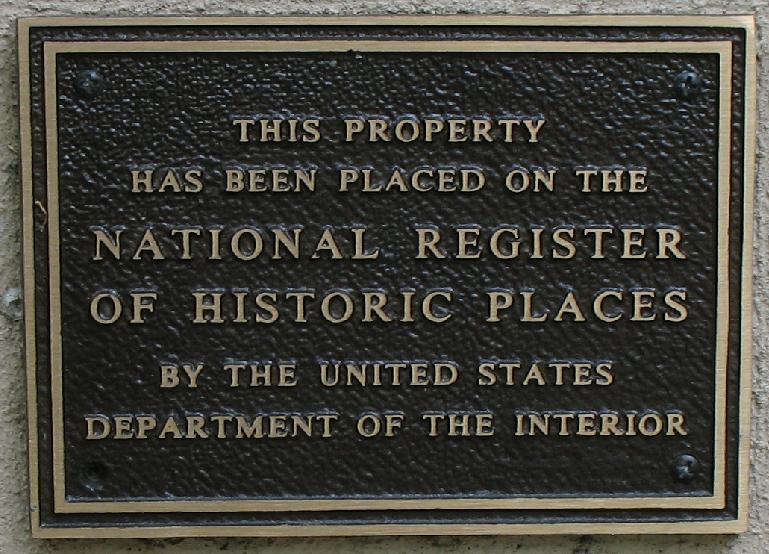
Fountainhead was placed on the National Register of Historic Places (NRHP) in November 1980, recognized for its significance as a Usonian home and a modern architectural structure in Mississippi. Credit: Natalie Maynor on Flickr Creative Commons, licensed under CC BY 2.0.
A Legacy That Resonates
The spirit of Fountainhead resonates deeply with Optima®’s own Modernist DNA. While decades—and tectonic shifts in technology, fabrication, and cultural expectations—separate Wright’s Usonian experiments from Optima’s contemporary communities, the philosophical throughline remains unmistakable.
Like Wright, Optima® is committed to creating architecture that responds to context rather than overpowering it; that invites natural light in generous, life-enhancing ways; and that integrates materials not merely for aesthetic effect, but for performance, longevity, and honest expression. Optima’s signature use of glass and concrete, its devotion to clean lines, and its belief in open, flexible, light-filled interiors all echo Wright’s conviction that architecture must elevate how people live every day.
Where Wright pioneered the idea of living “in harmony with nature,” Optima® advances that ethos for our time—through biophilic elements, desert-sensitive design, lush landscaped terraces, and high-performance glazing that blurs the boundary between inside and out.
A Living Tradition at Optima®
Fountainhead’s enduring relevance reminds us that Modernism is not a style frozen in time—it is a living tradition of problem-solving, clarity, and human-focused design. Wright’s work demonstrated that beauty and functionality are not opposites; they are partners. That innovation is not about novelty; it is about making life better, richer, more connected.
At Optima®, that legacy continues. Across all of our communities — Optima Signature® and Optima Lakeview® in Chicago, Optima Verdana® in Wilmette, and Optima Kierland Apartments®, Optima Sonoran Village® and Optima McDowell Mountain® in Scottsdale— we, too, embrace architecture as a means of bringing light, openness, and intention into everyday life.
Fountainhead stands as a reminder of what’s possible when design is both disciplined and daring. More than seventy-five years after its completion, it remains a beacon of modern living—and a touchstone for those of us carrying forward the enduring, ever-evolving language of Modernism.


Latest Articles

The Architects Behind the Vision: A Look at Optima’s Design Legacy

Living Alongside Art: How Sculpture Transforms a Community
